Anti-Inflammatory Eating Basics: A Practical Molecular-Level Guide
For: All
💊 Quick Take
- Inflammation, oxidative stress, and stress-hormone rhythm are linked, not separate problems.
- The goal is not a perfect diet, but consistent repeatable habits that can lower chronic inflammatory load.
- Food is one piece of the puzzle. Sleep patterns, stress management, and movement also matter for inflammation and recovery.
- Use this guide for prevention and self-management support, not diagnosis.
Read the full guide below for more context.
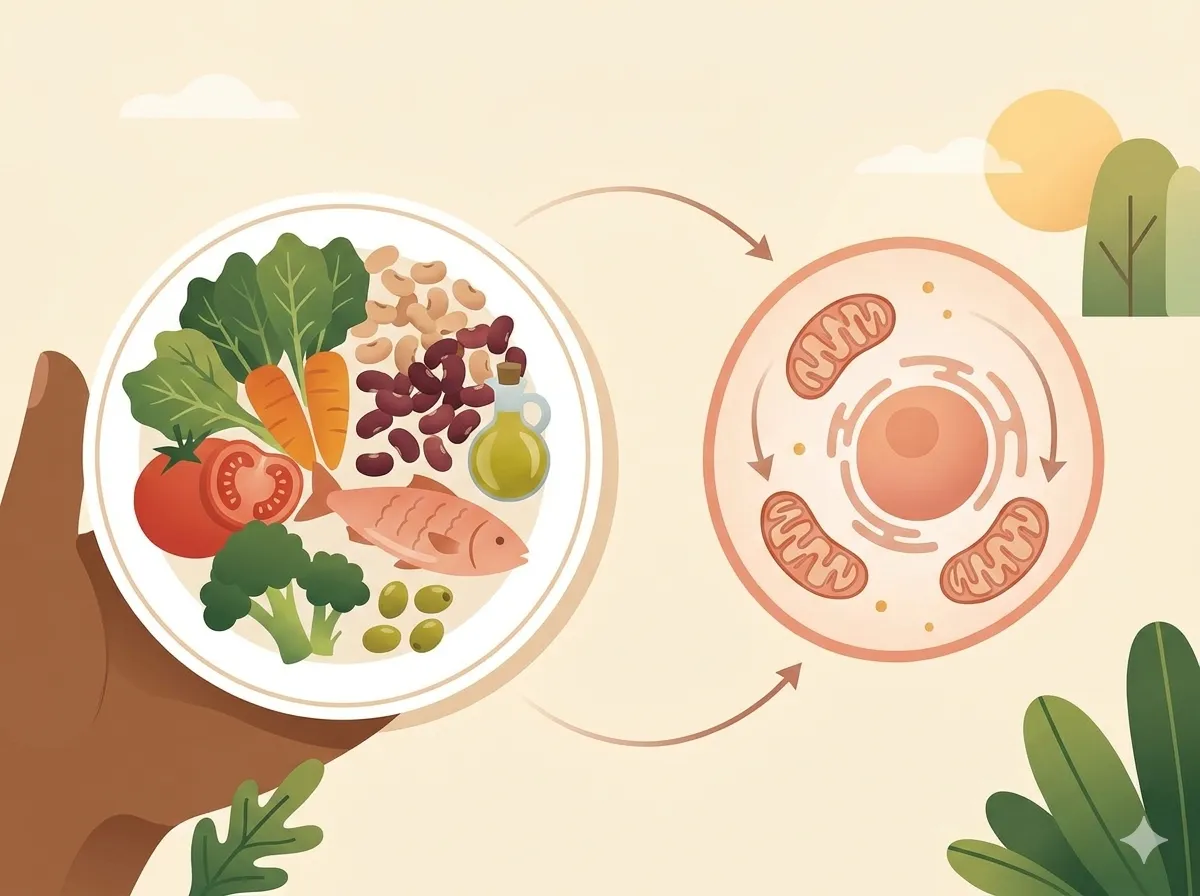
At cell level, mitochondria convert oxygen and nutrients into usable energy (ATP). When stress load, poor sleep, or dietary imbalance persists, reactive oxygen species (ROS) and inflammatory signaling can rise together. Over time, this can strain recovery, mood, cardiometabolic health, and oral health.
The 4-part model (simple)
- Mitochondrial energy use: how efficiently your cells use oxygen and fuel
- Oxidative stress load: excess ROS vs antioxidant defense
- Inflammatory signaling: acute helpful response vs chronic low-grade inflammation
- Cortisol rhythm: stress and sleep timing that can calm or amplify inflammation
If this pattern persists, what can happen next?
- High stress + poor sleep + low-quality diet can increase oxidative stress load over time
- Higher oxidative stress can amplify low-grade inflammatory signaling
- Persistent inflammation can overlap with poorer recovery, lower energy, and worse cardiometabolic/oral-health patterns
- You may feel more fatigue, brain fog, mood shifts, and have more trouble losing weight or improving blood markers
- Long-standing high inflammatory load is associated with higher chronic-condition risk over time
- This is a risk pathway, not a guaranteed outcome, and early action can help shift trajectory
What to do next (risk-reduction pathway)
- Step 1: Stabilize daily pattern (regular meals, sleep window, increased hydration)
- Step 2: Improve food quality (fiber + polyphenol foods, healthy fats, lower ultra-processed default intake)
- Step 3: Add movement and stress-regulation practices you can sustain
- Step 4: Track symptoms and review with GP/primary care if concerns persist
What to eat more often
- Vegetables, fruit, legumes, and whole grains (fiber + polyphenols)
- Nuts, mixed seeds, olive oil, Perilla oil and fish as core fat sources
- Protein from mixed sources you tolerate (fish, eggs, pulses, dairy alternatives)
- Mostly minimally processed foods and regular hydration
What to reduce
- Frequent ultra-processed snacks/meals as default intake pattern
- High added-sugar drinks and repeated high-sugar grazing
- Long runs of very low-fiber intake
- Late-night irregular eating with short/poor sleep
Practical 14-day reset
- Pick 2 daily anchors: one high-fiber meal and one anti-inflammatory fat source (for example olive oil, nuts, or fish).
- Track sleep window, intake pattern, and energy/mood for 14 days.
- If symptoms persist or worsen, escalate to GP/primary care with your notes.
- Related reads: Anti-Inflammatory Food Swaps: Simple Upgrades That Add Up, Anti-Inflammatory Morning, Lunch, and Dinner Templates, Inflammation Markers: How to Use CRP and Symptoms Safely, Oral Inflammation and Diet: Why Your Mouth Matters for Whole-Body Health.
Sources
Content Framework
BiteToBalance is a prevention-focused wellness tool for education and self-management support only, not a replacement for clinical care.
Last reviewed: 2026-02-28
Reviewer role: Clinical Content Team
Evidence level: Mixed evidence
Safety Signposting
If chest pain, severe shortness of breath, confusion, collapse, or immediate safety concerns occur, call 999 or go to A&E now.
Red flags
- Rapid deterioration in function, hydration, or ability to eat/drink
- Persistent severe fatigue, dizziness, or chest symptoms
- Escalating mental health safety concerns
What to do next
- Use NHS 111 for urgent non-emergency advice
- Arrange GP/primary care review with symptom and intake timeline
- Use this content as education, not diagnosis
#nutrition#prevention#resources#metabolic-health