Floss vs Interdental Brushes: Which One Do You Need?
💊 Quick Take
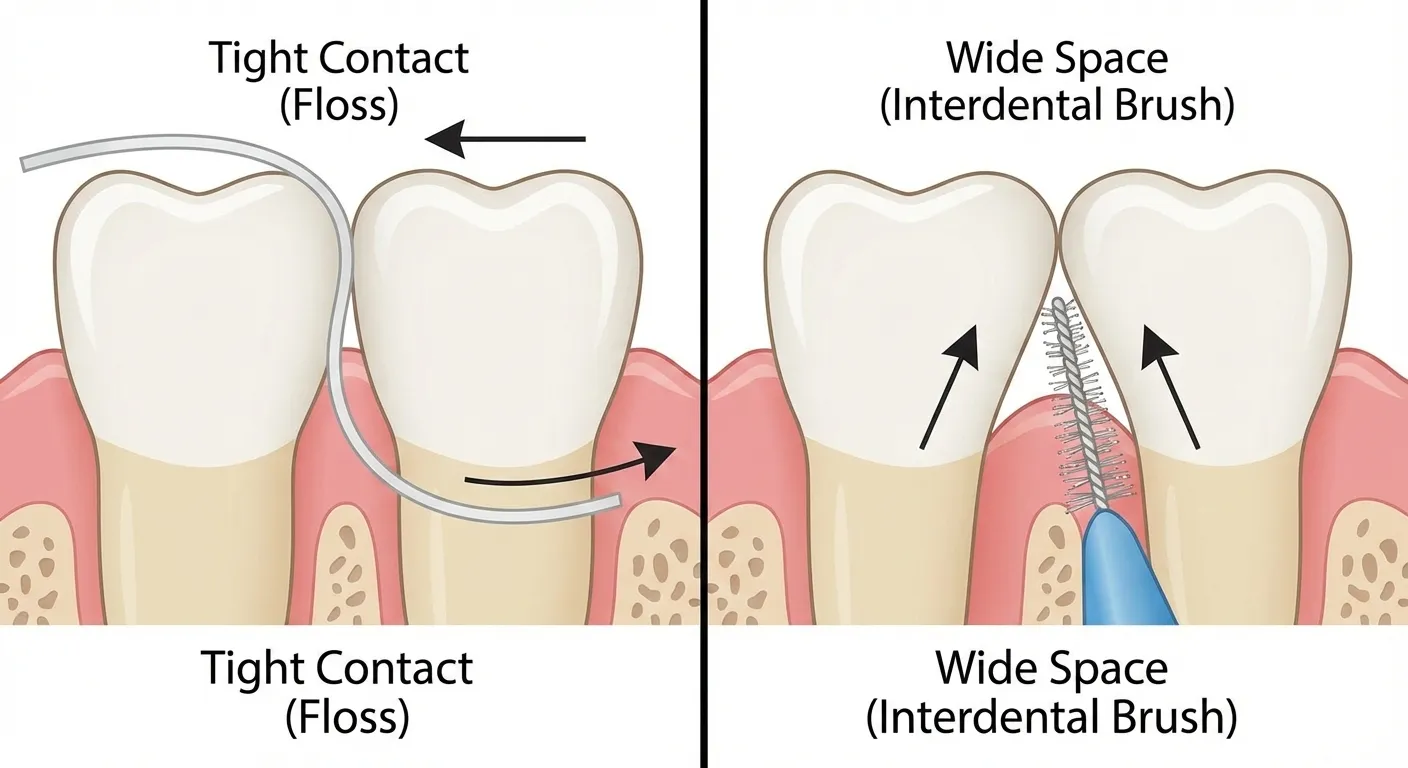
- Floss is usually best for tight contact points.
- Interdental brushes are usually better for open spaces/triangles.
- Many people benefit from a combination, based on their anatomy.
Read the full guide below for more context.
People often ask whether floss or interdental brushes are better. The best answer is anatomy-based: tight spaces usually suit floss; open embrasures or black triangles usually suit interdental brushes.
In suitable larger spaces, interdental brushes are often more effective than floss for plaque removal. If a brush does not fit a specific gap, use floss for that area instead.
When floss is useful
- Tight contact points where brushes cannot pass safely
- Young dentitions with minimal recession and smaller embrasures
- Areas where you can guide floss gently below the contact
- Under the gumline where plaque can accumulate and interdental brushes may not reach
When interdental brushes are useful
- Open interdental spaces or visible black triangles
- Gum recession with root exposure
- Orthodontic/appliance areas where plaque retention is higher
- Users who find floss technique difficult to maintain/manage
Correct sizing matters
- An interdental brush should pass with light resistance, not force.
- Too small may under-clean; too large may traumatize tissues.
- Ask your dental team to map which tool size fits each region.
Practical hybrid routine
- Use floss for very tight contacts and under the gumline.
- Use interdental brushes for open posterior, recession areas and quick gaps of food debris.
- Clean interdentally once daily, then brush with fluoride toothpaste.
Practical hints
- Do not force an interdental brush through a tight contact; switch to floss for that gap.
- Interdental brushes are reusable. Replace when bristles splay or the wire weakens (often every 1-2 weeks).
- For high-risk areas, you can dip the brush lightly in fluoride toothpaste or alcohol-free mouthwash.
- Use gentle in-and-out strokes; stop if you feel sharp pain and seek professional sizing advice.
“The right interdental tool is the one that fits your spaces safely and consistently.”
Content Framework
BiteToBalance is a prevention-focused wellness tool for education and self-management support only, not a replacement for clinical care.
Last reviewed: 2026-02-19
Reviewer role: Clinical Content Team
Evidence level: Guideline-based
Safety Signposting
If cleaning between teeth causes persistent pain, significant bleeding, or swelling, stop and seek professional dental review.
Red flags
- Daily bleeding that does not improve
- Painful or swollen gum papillae
- Rapidly increasing spacing, looseness, or recession
What to do next
- Request tool-size guidance from a dentist or hygienist
- Switch to gentler technique while symptoms settle
- Use this article for education and self-management support