Expanding Horizons: A Comprehensive Guide to Food Chaining for ARFID
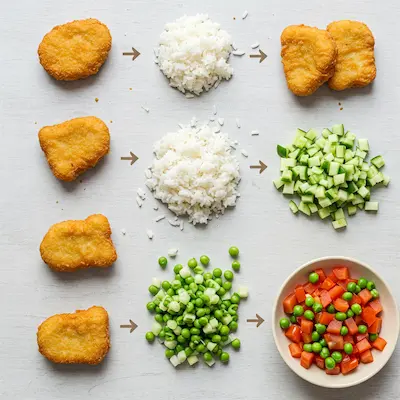
💊 Knowledge Pill
- Food chaining is a gradual approach used in feeding therapy to expand food variety.
- It works by making very small changes from foods a person already accepts.
- This approach is most effective when done slowly and often with professional guidance.
Read the full guide below for more context.
Food chaining is a highly effective and respected technique used to gradually increase the variety of foods an individual with ARFID will eat. It's built on the principle of making small, manageable steps from accepted, preferred foods to new, similar foods. This approach minimizes anxiety and leverages existing positive associations with food.
The Core Concept: Linking the Familiar to the New
Imagine a chain: each link is a food. You start with a food the person already eats and enjoys (an 'anchor food'). The next link is a food that is very similar in taste, texture, temperature, or appearance. Once this new food is accepted, it becomes a new anchor, and you introduce another slightly different food, and so on. The changes between links should be tiny, sometimes almost imperceptible.
Common Therapeutic Approaches by Age
With toddlers, food chaining is often integrated into playful, sensory-rich activities. The goal is exploration and positive association, not necessarily immediate consumption.
- Focus on Textures: If a toddler likes crunchy crackers, try a slightly different brand, then a similar shaped vegetable chip, then a slightly thicker one. For practical sensory support, see Understanding Sensory Sensitivities.
- Messy Play: Use pureed preferred foods (like yogurt or apple sauce) as a base for 'painting' or dipping with a new, similar textured food.
- One Change at a Time: Change only one sensory property (e.g., shape, then color, then slight flavor variation of a preferred food).
- Modeling: Parents and siblings eating and enjoying the 'chain' foods can be very influential.
Older children can be more involved in the process. Visuals and small, non-food rewards can be helpful.
- Visual Chains: Create a chart showing the food chain. Let the child help choose the next 'link' from a couple of options you provide.
- Taste Tests: Make it a 'food scientist' game. Tiny tastes are a success. Use descriptive words for sensory properties rather than just 'like' or 'dislike'.
- Reward Systems: Sticker charts or earning points towards a desired activity (not food rewards) for trying/accepting new chain links can be motivating.
- Involve Them in Prep: If they like a specific brand of chicken nugget, try making homemade nuggets together, then slightly vary the coating. For child-focused planning, see Helping Children with ARFID: Part 1 and Part 2.
For teens and adults, autonomy and understanding the 'why' are important. The process can be more collaborative and self-directed.
- Collaborative Planning: Work together to identify anchor foods and potential chain links based on sensory profiles.
- Focus on Goals: Link food chaining to personal goals (e.g., eating more comfortably with friends, improving energy levels, trying specific cuisines).
- Skill Building: Incorporate cooking or food preparation skills as part of the chaining process.
- Mindful Approach: Encourage paying attention to sensory details and internal reactions without judgment.
Advanced Techniques in Food Chaining
- Bridging Foods: Using a 'flavor bridge' (like a preferred dip or sauce) to make a new food more acceptable. The sauce is then gradually faded.
- Sensory Matching: Systematically analyzing the sensory properties (texture, taste, smell, appearance, temperature) of accepted foods and finding new foods that match most of these properties, changing only one aspect at a time.
- Backwards Chaining: Sometimes, starting from a food that is almost accepted and working 'backwards' to a more challenging precursor can be effective if a specific step is the barrier.
Troubleshooting Common Challenges
- Progress Stalls: Re-evaluate the 'links'. Is the jump too big? Go back to the last accepted food and try an even smaller step or a different sensory dimension.
- Regression: This is normal. Don't get discouraged. Revisit previously accepted foods and then try moving forward again slowly.
- Food Refusal: Avoid pressure. It's okay if a particular link isn't accepted. Take a break from that chain and try a different anchor food or chain direction.
- Family Dynamics: Ensure all caregivers are on board with the no-pressure approach. Consistency is key.
Patience and Persistence
- Food chaining is a marathon, not a sprint. Progress can be very slow, and that's okay.
- Celebrate every small success, even just touching or smelling a new food.
Professional Guidance: When to Seek Help
While some families can implement basic food chaining concepts successfully, ARFID is a complex disorder. It's highly recommended to work with a professional if:
- You're unsure where to start or how to identify appropriate chains.
- Progress is stalled despite your best efforts, or there's significant distress.
- Nutritional deficiencies or weight concerns are present.
- There are underlying medical or significant psychological factors (e.g., severe anxiety, trauma).
- You need help coordinating with a medical team. See Role of Therapy in ARFID and Finding an ARFID Dietitian.
A feeding therapist (often an Occupational Therapist or Speech and Language Therapist) or a dietitian experienced in ARFID can develop a personalized food chaining plan, provide expert guidance, and help navigate challenges. If progress stalls, review Coping with Food Anxiety in ARFID, Role of Therapy in ARFID, and ARFID Signposting Pathway: Who to See and When.
“Food chaining offers a structured, gentle path towards a more varied diet. With patience, understanding, and often professional support, it can unlock new food horizons.”
Content Framework
BiteToBalance is a prevention-focused wellness tool for education and self-management support only, not a replacement for clinical care.
Last reviewed: 2026-02-19
Reviewer role: Clinical Content Team
Evidence level: Guideline-based
Safety Signposting
If symptoms are severe, worsening, or you are worried about immediate safety, seek urgent medical care via local emergency services.
Red flags
- Symptoms that interfere with daily eating, hydration, or growth
- Ongoing pain, fatigue, dizziness, or persistent gastrointestinal issues
- Escalating anxiety or distress around food and mealtimes
What to do next
- Track patterns in food, symptoms, and oral health over time
- Discuss concerns with a qualified healthcare professional
- Use this article as educational support, not diagnosis